
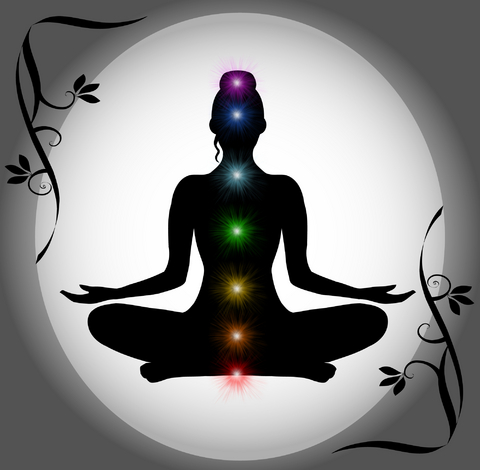
The CHAKRAS are spinning vortexes of subtle energy located along the spine from the base to the crown. They are the conduits through which the universal energy flows; they are where we receive, assimilate, and distribute our life energies. Our chakras serve as a map of ones inner world. The more freely energy flows within one, the stronger one's state of health and well-being. There are seven major chakras each correspond with particular functions within the body and with specific life circumstances, and the way in which we handle them, both inside ourselves and in our interactions with the world. When our chakra system is in balance our lives are in harmony. A chakra can become imbalance through external situations and internal habits (i.e. limiting self-concepts). They can become either deficient or excessive.
A deficient chakra neither receives appropriate energy nor easily manifests that chakras energy to the world. There's a sense of being physically and emotionally closed down in the energy of a deficient chakra. When a chakra is excessive, it is too overloaded to operate in a healthy way and becomes a dominating force in a person's life.
The seven major CHAKRAS divided into three groups, the pysiological, the personal and the spiritual:
Physiological Chakra Group (1st & 2nd Chakras):
1st Chakra
Aroma Symphony Fragrance: Instinct
Sanskrit name: Muladhara (meaning root or foundation)
English Name: Root chakra
Color: Red
Element: Earth
Location: The perineum at the base of the spine
Spinal Position: 4th sacral
Key words: basic needs, grounding, security, survival
Domain: Material security
In Harmony:
- Allowing one's self to be vulnerable
- Asking what can be learned from adversity
- Being in the present moment
- Trusting in a higher power
- Valuing one's self
Unbalanced:
- Addictive behavior
- Avoidance of intimacy
- Consideration of oneself regardless of others
- Distrustful or hostile relationship to the world
- Tunnel vision
- Workaholism, driven by a lack of self-worth
Personal Chakra Group (3rd, 4th & 5th Chakras)
3rd Chakra
Aroma Symphony Fragrance: Intuition
Sanskrit name: Manipura (lustrous gem)
English Name: Navel Chakra
Color: Yellow
Element: Fire
Location: At the navel over the solar plexus
Spinal Position: 8th thoracic
Key words: Power, will
Domain: Introversion/extraverion; power/weakness
In Harmony:
- Awareness of the effect of one's actions upon others
- Control over one's life
- Exemplary leadership skills
- Practicality
- What's in it for US?
- Will pwer
Unbalanced:
- Dogmatic conformity
- Greed
- Need for external validation
- Rights over responsibility
- What's in it for ME?
5th Chakra
Aroma Symphony Fragrance: EXRESS
Sanskrit name: Vishuddha (purification)
English Name: Throat Chakra
Color: Light blue
Element: ether
Location: At the front of the throat
Spinal Position: 3rd cervical
Key words: Communication, creative expression
Domain: Wisdom, communication, higher mind
In Harmony:
- Always voicing the truth
- Being listened to as an authoritative voice
- Hearing what has not been said
- Inspirational communication
Unbalanced:
- Cunning
- Creative untruthfulness (deceit without lying)
- Frustration t inadequate communication
- Withdrawal from the emotions into the mind
- Shyness
- Speaking too bluntly
Spiritual Chakra Group (6th & 7th Chakras)
6th Chakra
Aroma Symphony Fragrance: WISDOM
Sanskrit name: Ajna (perception)
English Name: Third Eye Chakra
Color: Indigo
Element: all elements
Location: Space between the eyebrows
Spinal Position: 1st cervical
Key words: Intuition, perception, sixth sense, vision
Domain: Full self-realization
In Harmony:
- Being comfortable in any reality
- Clear perception
- Psychic abilities, particularly clairvoyance
- Reliable intuition
- Seeing energy within, and beyond matter and form
Unbalanced:
- Being "out of it"; out of the body, or out of touch with the body
- Confusion of what is real and what appears to be real
- Hiding in intellectual analysis (denial of actual experiential reality)
- Inability to focus on any one thing
- Psychic disturbance
Aroma Symphony®
Nature's Divine Gifts
For Your
Mind, Body & Soul
(mostly organic - 100% natural)
2nd Chakra
Aroma Symphony Fragrance: Passion
Sanskrit name: Svadhisthana (sweetness)
English Name: Sacral Chakra
Color: Orange
Element: Water
Location: Over the spleen, under the solar plexus
Spinal Position: 1st lumbar
Key words: creativity, desire, sexuality
Domain: Sexuality; creativity; likes/dislikes; desire/lust; greed
In Harmony:
- Ability to initiate
- Empathy with others
- Generosity and willingness to share
- Mutually empowering relationships
- Passion for life
Unbalanced:
- Exhibitionist
- Inadequacy
- Shallow relationships
- Shame of the body or of sexuality
- Wild-child behavior into adulthood
4th Chakra
Aroma Symphony Fragrance: Soul
Sanskrit name: Anahata (unstruck)
English Name: Heart Chakra
Color: Green
Element: Air
Location: Over the heart
Spinal Position: 8th cervical
Key words: compassion, love
Domain: Compassion; beginning of self-realization; sharing;
unconditional love; selfless service; emotional clarity
In Harmony:
- Acceptance that all is as it should be
- Harmonious relationships
- Harmony with nature
- Positive neutrality
- Seeing a higher-being in all
- Unconditional love for all
Unbalanced:
- Alienation
- Attachment
- Grief
- Loneliness
- Passive aggression
- Questioning the existence of love
7th Chakra
Aroma Symphony Fragrance: NIRVANA
Sanskrit name: Sahasrara (infinite)
English Name: Crown Chakra
Color: violet/ white/ gold
Element: all elements
Location: Top of the head
Key words: Divine knowledge and understanding, acceptance, bliss
Domain: Universal realization
In Harmony:
- Bliss; being in but not of this world
- The experience of all as one
- The integration, expression, and actualization of such peak experiences
- Saintliness
- Samadhi
Unbalanced:
- Abuse of "lower" life forms (human imperialism)
- Doubt and denial of the spiritual reality
- Religious extremism.
